





FAQ – What is the difference between a dehumidifier and an air dryer?
The industry and construction sector face various challenges when it comes to controlling air humidity in their premises. Two types of equipment are available on the market to control humidity in workshops and warehouses: condensation dehumidifiers and adsorption air dryers. Both rely on different dehumidification technologies.
Condensation dehumidifiers
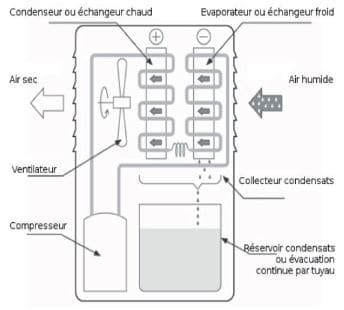
Dehumidifiers (condensation type) operate by condensing the water vapour contained in the air. The collected condensate is drained into a tank or a wastewater evacuation.
Adsorption air dryers
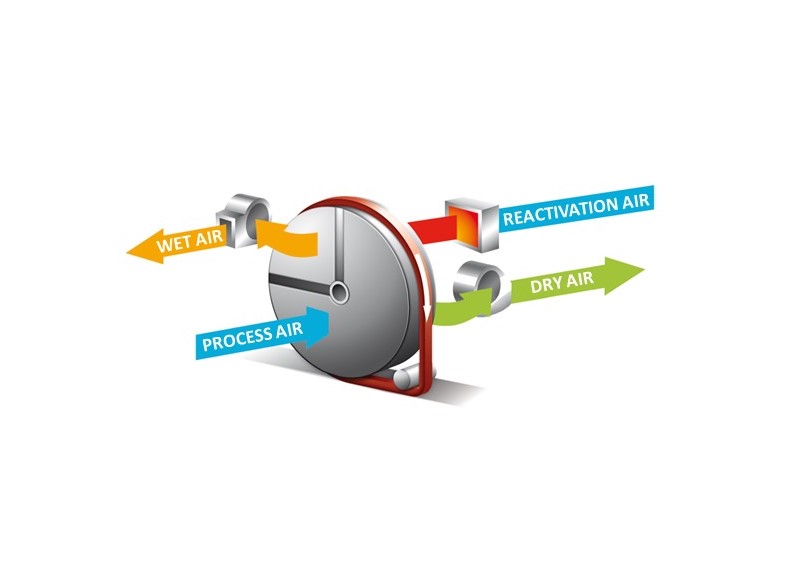
Adsorption air dryers use an adsorption drying wheel, air filters, one or more fans and a heat regenerative system. Moist air is evacuated outside the building in the form of gas.
Main differences between condensation air dehumidifiers and adsorption air dryers
Temperature rise
The difference between a dehumidifier and an air dryer, apart from a significantly lower price, lies in the rise in temperature: around +2°C for a dehumidifier and between +15°C and +20°C for an air dryer.
Low relative humidity
Adsorption air dryers are used when low humidity (approximately below 30%) is required at low temperature.
Above 50% relative humidity, a cooling coil is suitable for achieving this level.
Ambient temperature of the air to be dehumidified
Condensation dehumidifiers can be used at temperatures between +7 and +35°C and relative humidity levels between 35 and 95%.
Air dryers are designed to treat air and be installed in environments with temperatures between -15 and 40°C.
Energy consumption
Air dryers consume less energy than air dehumidifiers when low humidity levels need to be achieved.
Condensation air dehumidifiers lower the temperature below the dew point, which is costly and requires a significant amount of energy to power them.
Not sure which equipment to choose? Contact our drying and dehumidification experts for personalised advice and a free assessment based on your specific needs: